
About Violin Parampara

Violin Parampara is a library for Indian violin music: violinists, teachers, lineages, photos, recordings, violin makers, luthiers, and dealers brought together in one place.

It is meant to act as a one-stop archive for anyone trying to discover Indian violinists, understand their musical journeys, and follow how the violin became a cherished voice in both Carnatic and Hindustani music.

Why this website exists

A centenary archive for memory, discovery, and continuity.

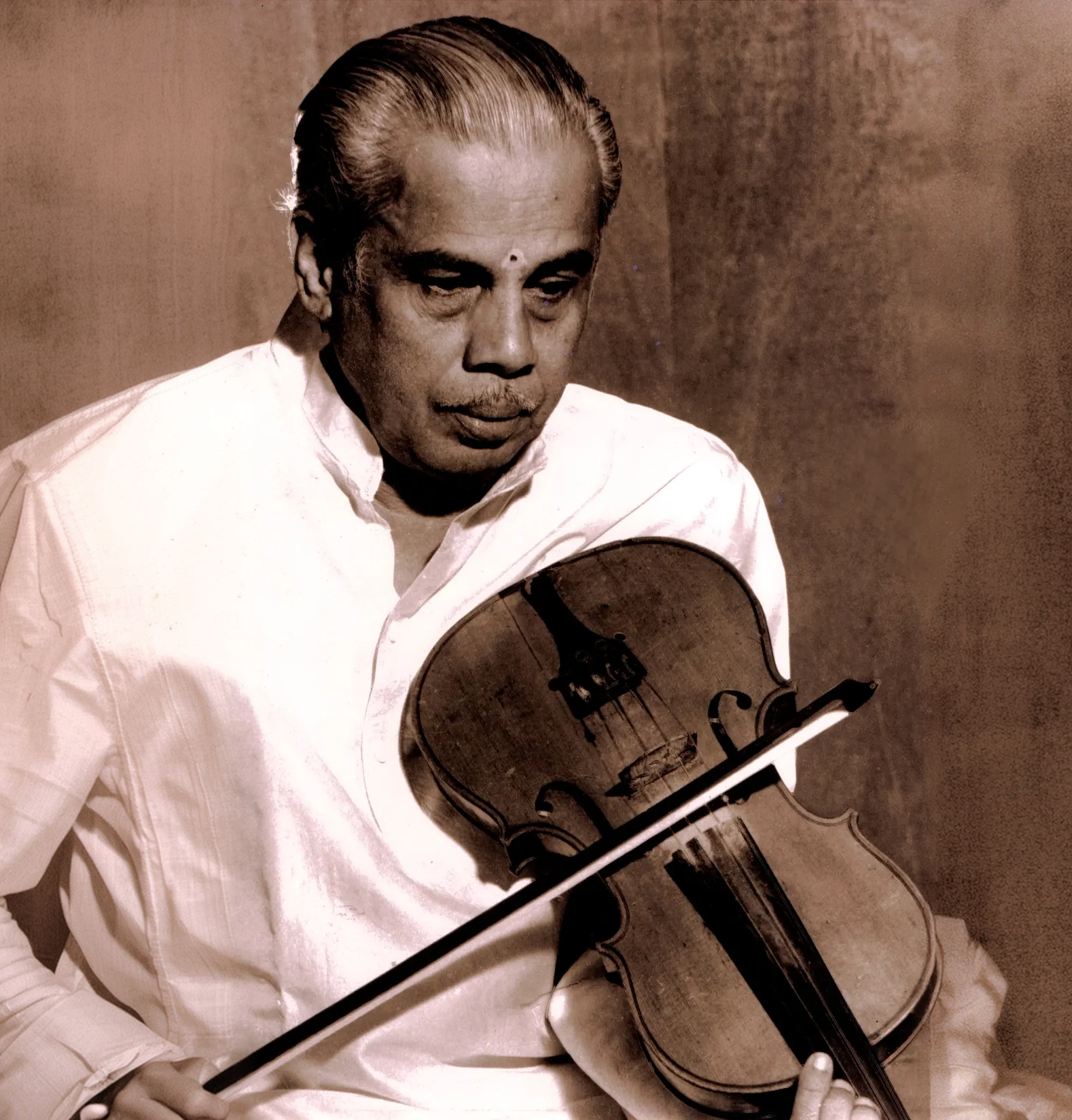
Violin Parampara was created as a centenary initiative for Prof. H. V. Krishnamurthy, with the larger purpose of preserving Indian violin history in a form that is easy to search, browse, and extend. The archive brings musicians, makers, luthiers, dealers, media, and lineage references together so students, rasikas, families, and researchers have one reliable place to begin.

Portrait of H. V. Krishnamurthy

Carnatic

H. V. Krishnamurthy

1926 - Carnatic violinist, professor, educator, and institution builder

This archive honors Prof. H. V. Krishnamurthy's legacy as a Carnatic violinist, professor, educator, and institution builder whose work shaped generations of students and music seekers.

Read more
H. K. Venkatram with the violin

Carnatic

H. K. Venkatram

1965 - Carnatic violinist, teacher, technologist, and archive-builder

Led by his son and disciple H. K. Venkatram, this initiative carries that spirit forward by documenting artists, lineages, images, and public references for the Indian violin community.

Read more

History of Violin

Follow the violin's wider story from early bowed-string ancestors through medieval instrument families, Cremona craft, body architecture, and the bow that shaped its sustained voice.

Early bowed roots

The story begins with bowed-string ancestors.

Ravanastron / Ravanhatha

The supplied source material traces one early line of the bowed-string story to the Ravanastron, also known as the Ravanhatha. It is described as an Indian stringed instrument played with a bow and used by wandering pilgrims.

In Hindu tradition, the musical bow is associated with Ravana, and the instrument is said to take its name from that lineage of memory. Rather than treating this as a single linear origin, the archive presents it as one important cultural reference in the wider history of bowed instruments.

Indian bowed-string reference
Linked with itinerant devotional practice
Traditional attribution to Ravana

History of Indian Violin

See how the western instrument was adapted into Indian classical music, especially through Baluswami Dikshitar's seated Carnatic posture and the violin's later presence across Carnatic and Hindustani lineages.

Indian adaptation

The decisive Indian story is adaptation, not import alone.

From western instrument to raga voice

Baluswami Dikshitar, brother of Muthuswami Dikshitar, is widely remembered for adapting the violin to Carnatic music. After learning the instrument from a visiting European violinist in the Manali circle, he reshaped its technique for Indian melodic movement, gamaka, and seated performance practice.

The source material also connects Parur Sundaram Iyer with the introduction of the violin into Hindustani music circles in 1909 through Gandharva Maha Vidyalaya. From there, the violin becomes a bridge across styles, regions, pedagogies, and lineages.

Baluswami Dikshitar: early Carnatic adaptation
Vadivelu: popularisation in Carnatic concerts
Parur Sundaram Iyer: Hindustani connection through Gandharva Maha Vidyalaya